
Exploring Taj Hotels Palace A Visual Journey Through Iconic Luxury

Some hotels give you a room. Taj palace hotels give you a sense of having crossed into another era, where marble corridors, lake views, carved jharokhas, grand staircases, and quiet courtyards shape the whole stay.
Across India, Taj is closely linked with heritage hospitality. Its palace properties are not just luxurious places to sleep. Many sit inside or around former royal residences, historic mansions, and landmark buildings that carry stories of princely India, colonial-era travel, royal ceremonies, and modern Indian service culture.
This visual journey looks at what makes Taj palace hotels so memorable, from architecture and interiors to dining, location, and the feeling of slow, graceful travel.
What makes a Taj palace hotel feel different
Luxury can be copied. Heritage is harder to recreate.
That is why Taj palace hotels feel distinct. Their appeal comes from a mix of location, history, architecture, and service. A modern five-star property may impress with scale and technology, but a palace hotel often wins through mood.
You notice it in small details:
The arrival
A driveway, a courtyard, a lake jetty, or a grand entrance sets the tone before check-in.
The architecture
Domes, arches, cupolas, stone screens, courtyards, chandeliers, and hand-crafted details create a sense of place.
The silence
Many palace hotels are designed around gardens, terraces, and thick walls. They feel calm even when the city outside is busy.
The service style
Service tends to be polished, warm, and attentive without becoming loud.
The stories
Former royal residences and historic hotels bring a depth that new buildings rarely match.
A Taj palace stay is not only about a larger room or finer linen. It is about atmosphere. The building itself becomes part of the travel experience.
Iconic Taj palace hotels in India
India has several Taj properties that are regularly associated with palace-style luxury. Each one offers a different setting and mood. Some are lake-facing. Some sit in historic cities. Some carry the romance of royal Rajasthan, while others reflect the refined culture of Hyderabad or the grandeur of Mumbai.
Taj palace hotel | Location | What makes it special |
Taj Lake Palace | Udaipur, Rajasthan | A white marble palace-like retreat set in Lake Pichola |
Rambagh Palace | Jaipur, Rajasthan | A former royal residence with gardens, courtyards, and regal interiors |
Umaid Bhawan Palace | Jodhpur, Rajasthan | A grand Art Deco and royal palace property with sweeping views |
Taj Falaknuma Palace | Hyderabad, Telangana | A hilltop palace known for old-world grandeur and city views |
The Taj Mahal Palace | Mumbai, Maharashtra | A historic landmark hotel facing the Gateway of India |
These hotels are not identical, and that is the point. Each property reflects its region.
Udaipur leans into water, romance, and marble. Jaipur brings garden pavilions, royal ceremony, and pink-city elegance. Jodhpur feels grand and sunlit, with desert light and wide spaces. Hyderabad brings Nizami refinement, rich interiors, and a hilltop setting. Mumbai offers landmark energy, sea-facing views, and a sense of Indian hospitality history.
Taj Lake Palace in Udaipur feels like a floating dream
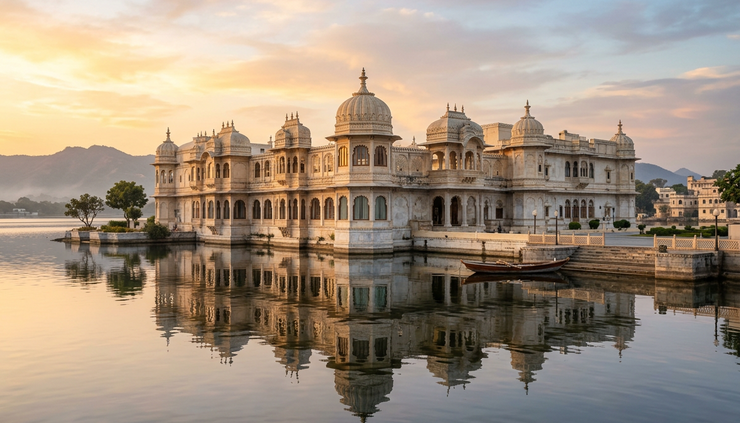
Taj Lake Palace is one of India’s most recognisable luxury hotels. Set on Lake Pichola, it appears to float on water, especially when seen from the City Palace side or during the golden hours of sunrise and sunset.
The charm begins before you enter. The journey across the lake adds a sense of ceremony. The city grows softer behind you, the water reflects the sky, and the white structure ahead starts to feel almost unreal.
Inside, the mood is quiet and romantic. Courtyards, fountains, carved details, and lake-facing corners make it ideal for slow travel. It is not a hotel where you rush through a checklist. It asks you to sit, look out, and let the view do its work.
Best suited for:
Honeymoon trips
Anniversary stays
Slow luxury holidays
Photography lovers
Travellers who want a calm palace experience
The visual highlight is the way the building interacts with water. Morning light gives it a delicate glow. Evening turns it cinematic. At night, reflections make the lake look like part of the palace itself.
Rambagh Palace in Jaipur brings royal Rajasthan to life
Rambagh Palace has a different kind of beauty. It is less about water and more about gardens, open lawns, verandahs, and royal interiors. Once associated with Jaipur’s royal family, it carries the character of a residence rather than only a hotel.
The property feels graceful without needing to shout. Long corridors, polished floors, antique-style details, and carefully kept gardens create a strong sense of occasion. Even a simple walk through the property can feel special.
Jaipur itself adds to the experience. The city is rich with forts, palaces, bazaars, craft traditions, and food. A stay here pairs well with visits to Amber Fort, City Palace, Jantar Mantar, and the old city markets.
What stands out most at Rambagh Palace is the balance between grandeur and warmth. It feels ceremonial, yet personal. That is a rare mix.
For travellers planning a special Rajasthan itinerary, Jaipur is often the easiest city to include because of its strong road, rail, and flight connections. A palace stay here can become the centrepiece of the trip.

Umaid Bhawan Palace in Jodhpur is grand, golden, and dramatic
Jodhpur has a strong visual identity. The blue houses, Mehrangarh Fort, desert light, and sandstone tones make the city instantly memorable. Umaid Bhawan Palace adds another layer to that image.
The palace is known for its imposing scale and Art Deco influence. Its golden stone exterior catches the Rajasthan sun beautifully. From many angles, it feels more like a royal landmark than a hotel.
A stay here suits travellers who enjoy space, history, and dramatic architecture. The interiors often feel more formal than breezy, with grand halls and carefully composed rooms. The surrounding lawns and views offer a sense of openness that fits Jodhpur’s desert-edge setting.
The best way to enjoy a property like this is to avoid overpacking the day. Visit Mehrangarh Fort, explore the old city for a few hours, then return before sunset. Palace hotels reward time spent on the property.
That is one of the most common mistakes travellers make with luxury heritage stays. They book a beautiful hotel, then spend the entire day outside. With a place like Umaid Bhawan Palace, the hotel itself deserves time in the itinerary.
Taj Falaknuma Palace in Hyderabad offers hilltop elegance
Taj Falaknuma Palace brings a different cultural flavour. Hyderabad has its own language of luxury, shaped by Nizami history, refined dining, pearls, textiles, and grand interiors.
Set above the city, Falaknuma has a hilltop presence. The setting creates distance from the everyday city rhythm below. Guests often remember the sense of arrival, the views, and the palace’s old-world interiors.
The visual tone here is rich and dramatic. Think grand staircases, ornate ceilings, vintage-style furniture, chandeliers, and formal dining spaces. It suits travellers who enjoy heritage with a strong sense of theatre.
Hyderabad also gives the stay a memorable food connection. The city is famous for biryani, kebabs, haleem during the season, Irani chai, and rich desserts. A palace stay here pairs naturally with a food-led itinerary.
Falaknuma is ideal for those who want a heritage break without choosing the more familiar Rajasthan route. It feels royal, but in a distinctly Deccan way.
The Taj Mahal Palace in Mumbai is a city landmark
The Taj Mahal Palace in Mumbai is not a palace in the same way as the royal residences of Rajasthan or Hyderabad. Yet it belongs in any discussion of iconic Taj luxury because of its history, architecture, and position facing the Gateway of India.
Opened in the early 20th century, the hotel has become one of Mumbai’s most recognised landmarks. Its domes, sea-facing profile, and old-world interiors have made it part of the city’s identity.
This is a different kind of luxury experience. It is urban, energetic, and layered with history. Step outside and you are in Colaba, close to the waterfront, galleries, cafés, shops, and heritage streets. Step inside and the pace changes.
The Taj Mahal Palace works well for travellers who want a luxury city stay with cultural access. It is also a strong option for those who want to experience Mumbai through a historic lens rather than only through malls, nightlife, or business districts.
Its greatest strength is contrast. The sea, the Gateway of India, the movement of Mumbai, and the calm interiors create a powerful travel memory.
How to choose the right Taj palace experience
The best Taj palace hotel depends on the kind of journey you want. A romantic lake setting feels very different from a grand desert palace or a city landmark.
If you want | Choose this kind of stay |
Romance and lake views | Taj Lake Palace, Udaipur |
Classic royal Rajasthan | Rambagh Palace, Jaipur |
Grand architecture and open space | Umaid Bhawan Palace, Jodhpur |
Nizami refinement and hilltop views | Taj Falaknuma Palace, Hyderabad |
Historic city luxury | The Taj Mahal Palace, Mumbai |
A few practical points can help before booking:
Stay for at least two nights if possible
One night can feel too short for a palace hotel. Two nights give time to enjoy the property.
Check the season
Rajasthan is more comfortable in cooler months. Monsoon can make Udaipur especially atmospheric, but plans may need flexibility.
Think beyond the room
Dining, views, heritage walks, gardens, and public spaces are part of the value.
Plan fewer activities
Palace hotels are not just overnight stops. Build in slow mornings and relaxed evenings.
Book early for special dates
Festive periods, wedding seasons, and long weekends can fill up quickly.
If you prefer an easier way to compare stays, routes, and availability, you can book your hotels with happymytour and check options on happymytour.com while planning your India itinerary.
What to notice during your stay
A palace hotel becomes more rewarding when you pay attention to the details. The beauty is often in what surrounds the obvious luxury.
Look at the ceilings. Many heritage-style spaces use painted panels, mouldings, chandeliers, or carved woodwork to create depth.
Notice the flooring. Marble, stone, patterned tiles, and polished surfaces change the feel of each corridor.
Watch how the light moves. Palace architecture often creates beautiful shadows through arches, jaalis, and verandahs.
Spend time in transitional spaces. Corridors, courtyards, terraces, and garden paths are where the character of these hotels often appears most clearly.
Listen to the quiet. Thick walls, water bodies, gardens, and careful layouts give many palace hotels a calm rhythm.
These details turn a stay into a memory. They also make the experience feel personal, even in a grand setting.

A visual journey worth taking slowly
Taj palace hotels are not only about luxury in the usual sense. They are about place, proportion, memory, and mood. A lake in Udaipur, a garden in Jaipur, a golden palace in Jodhpur, a hilltop in Hyderabad, or a sea-facing landmark in Mumbai can each shape a completely different kind of stay.
The best way to experience them is slowly. Arrive early if you can. Walk through the public spaces. Watch the light change. Leave time for one long meal, one quiet morning, and one unplanned hour with a view.
That is where the real value of a Taj palace stay appears. Not only in the room key, the service, or the famous name, but in the feeling that, for a short while, travel has become more graceful than ordinary life.


Comments